Wednesday, March 18, 2026
Author: Biketi Charity S. Nelima
Category: Education, CBC
⏱️ Estimated Read Time: 12 min read
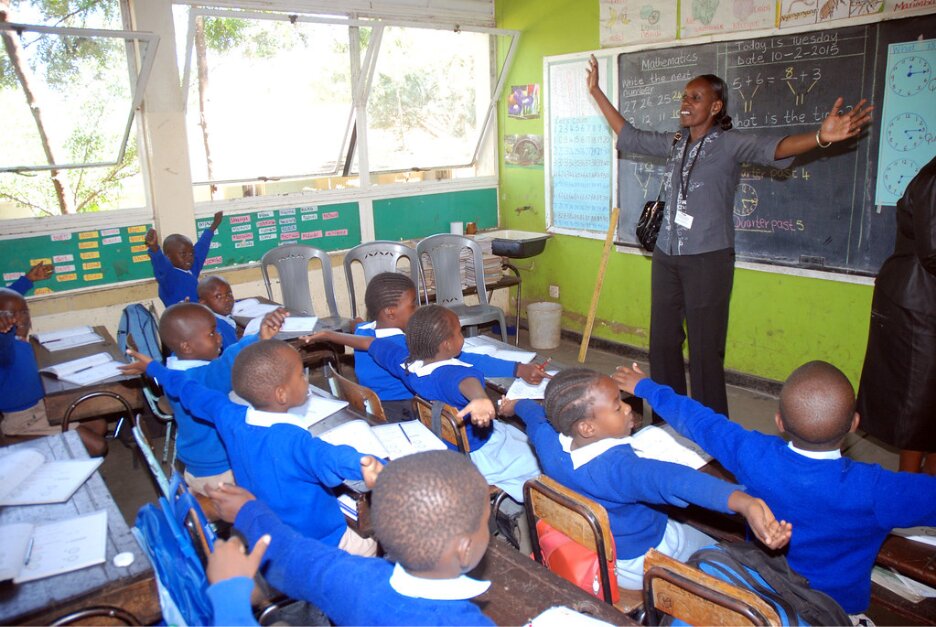
Education is one of the strongest pillars of economic development. It serves as the foundation for economic freedom, stability, and productivity. According to the World Economic Forum in The Global Competitiveness Report 2015–2016, education plays a central role in shaping a nation's ability to innovate, compete, and sustain long-term economic growth. A well-educated population drives technological advancements, strengthens policy formulation, and builds the human capital necessary for countries to transition from basic, low-value production to sophisticated, high-value economic activities.
The 2024 report by the Institute of Development Studies, “The Contribution of Education to Economic Growth” highlights the crucial role education plays in strengthening economic performance. The report explains that investment in education improves labour productivity by equipping workers with the skills needed to adopt new technologies, adapt to evolving market demands, and enhance efficiency across different sectors of the economy. Quality education fosters critical thinking, digital competence, and problem-solving abilities, all of which support innovation, attract both domestic and foreign investment, and strengthen a country’s competitiveness in today’s knowledge-driven global economy.
Countries that have prioritised education demonstrate economic value. For example, South Korea. In the 1960s, South Korea was a low-income country with limited industrial capacity, but the government made education a national priority. Over time, sustained investment in education helped build a highly skilled workforce that supported rapid industrialisation and technological advancement. Today, education spending in South Korea remains relatively high, reaching about 4.87% of GDP in 2021, while total investment across all education levels is estimated at around 5.6% of GDP, which is above the Organisation for Economic Co-operation and Development (OECD) average of 4.7%
The Kenyan constitution, 2010, establishes the right to free and compulsory basic education for every child and mandates the state to ensure the youth have access to relevant education and training. It also requires special opportunities in education for minorities and marginalised groups and guarantees access to educational institutions and facilities for persons with disabilities.
Public expenditure on education in the country remains relatively high compared to many nations, averaging about 4.0% of GDP in 2024, a level that falls within the recommended range set by UNESCO. This sustained commitment to education has contributed to the development of human capital and broader socioeconomic progress.
Empirical evidence further demonstrates the economic returns of such investments. Journal of Education and Practice Studies, 2016, indicate that a 1% increase in education expenditure per worker can lead to an approximate 0.5% rise in long-term economic output, highlighting the strong productivity benefits associated with human capital development Over the past two decades, Kenya’s Human Development Index has steadily improved, rising from 0.487 in 2000 to about 0.601 in 2022, reflecting notable progress in skills development, knowledge acquisition, and overall human development according to United Nations Development Programme (UNDP), 2023.
Against this broader evidence on the economic importance of education, it is necessary to examine how education systems are designed and implemented in practice. Kenya’s education sector has undergone significant reforms aimed at strengthening human capital and improving learning outcomes. This article, therefore, evaluates the transition from the former 8-4-4 education system to the Competency-Based Curriculum (CBC), assessing both the intended benefits of the reform and the structural and implementation challenges that have emerged. By examining the progress, pressures, and limitations of the reform, the discussion highlights how education policy can simultaneously present opportunities for development while revealing systemic weaknesses that require policy attention.
Introduced in 1985, the 8-4-4 structure was initially intended to equip learners with practical and theoretical skills relevant to national development. Over time, however, it became widely criticised for encouraging memorisation and cramming at the expense of creativity, vocational skills, and problem-solving abilities, leading to a decline in relevance in a changing global economy, as corroborated in the International Journal of Curriculum and Instruction, 2024. According to the Kenya Institute of Curriculum Development (KICD), 2017 nationwide needs assessment conducted by education experts further revealed widespread dissatisfaction with the system, particularly among learners and stakeholders who viewed it as misaligned with contemporary social and economic demands
In response, the CBC system was introduced in 2017 as a deliberate effort to reorient Kenya’s education system toward skills, competencies, and learner-centred education that align with international standards and labour-market needs. According to Issues and Ideas in Education. Vol. 12, No. 2, 2024 CBC focuses on developing critical thinking, creativity, communication, digital literacy, and problem-solving skills essential for the twenty-first century. The system follows a 2-6-3-3-3 structure: two years of pre-primary education, six years of primary school, three years of junior secondary, three years of senior secondary, and three years at university.
The framework emphasises authentic assessment through projects, practical activities, and performance tasks, enabling learners to demonstrate mastery progress. This approach addresses weaknesses identified in the former 8-4-4 system, particularly overreliance on summative exams, according to the Ministry of Education, 2019. Additionally, the curriculum integrates technical and creative learning areas such as Agriculture, Art and Craft, Home Science, and Computer Science, supporting the development of practical and employable skills aligned with 21st-century demands KICD, 2017.
International Journal of Research and Innovation in Social Science (IJRISS), 2024, indicates that beyond individual learners, CBC has strengthened parental involvement and national development outcomes. The Basic Education Curriculum Framework explicitly outlines shared responsibility among teachers, parents, and the community in supporting learner growth.
Parents are expected to participate in home-based learning and talent identification, enhancing collaboration between schools and households. At the societal level, CBC incorporates Community Service Learning at upper levels of basic education, enabling learners to apply classroom knowledge to community challenges, thereby fostering civic responsibility and social cohesion Ministry of Education, 2019. Nationally, the curriculum aligns with Kenya’s Vision 2030 human capital goals by prioritising skills development, innovation, and ethical values over exam ranking. Through this competency-oriented structure, CBC contributes to building a skilled, adaptable, and value-driven workforce capable of supporting sustainable economic and social transformation.
Challenges facing the implementation of the Competency-Based Curriculum (CBC) in Kenya are teacher preparedness. CBC requires a fundamental shift to learner-centred pedagogy that emphasises skills acquisition, creativity, and problem-solving. However, according to the East African Journal of Education Studies, 2021 many teachers received rushed, insufficient, or uneven in-service training, leaving them ill-equipped to design competency-based lessons, conduct continuous assessments, or manage differentiated instruction.
Teacher capacity challenges, inadequate learning resources and infrastructure. CBC emphasises experiential learning, digital literacy, and practical engagement, yet many schools, particularly in rural and marginalised areas, lack essential facilities such as science laboratories, workshops, libraries, ICT equipment, and reliable internet connectivity. Findings by the National Gender and Equality Commission (NGEC) reveal stark disparities between urban and rural schools in access to CBC-supportive infrastructure, raising concerns about equity and inclusivity. These infrastructural deficits significantly limit the effective delivery of competency-based learning and risk exacerbating regional inequalities in educational outcomes.
Financial burden is placed on parents and households. According to a report on Kenya’s Competency-Based Curriculum, 2025. Unlike the 8-4-4 system, CBC requires learners to engage in continuous projects, creative tasks, and practical activities that demand additional learning materials, digital devices, and assessment tools. Media surveys and education sector reviews indicate that parents are increasingly required to finance these materials, imposing disproportionate costs on low-income families. This growing financial responsibility contradicts CBC’s inclusive philosophy and raises the risk that the curriculum may unintentionally widen socio-economic disparities in access to quality education.
The assessment framework under CBC also presents notable challenges. Although CBC seeks to replace high-stakes examinations with continuous formative assessment based on demonstrated competencies, its execution has been problematic. Large class sizes, limited teacher training, and unclear assessment guidelines have resulted in practices that still prioritise scores and documentation over actual skill acquisition. Policy reviews by KICD suggest that many schools continue to measure learner success using examination-style metrics, effectively reproducing the examination-oriented culture of the 8-4-4 system. This weakens the transformative intent of CBC and risks rebranding assessment rather than reforming it.
The transition from Junior Secondary School (JSS) to Senior School, where nationally, a total of 1,130,459 candidates sat the 2025 KJSEA. Education Cabinet Secretary Mr Julius Ogamba stated 59.09% of candidates demonstrated potential to pursue STEM pathways, while 46.52% showed capacity for Social Sciences and 48.73% for Arts and Sports Science. However, many specialised schools offering these pathways are financially inaccessible; as a result, the government has allowed learners to enrol in nearby schools without uniforms or school fees, Citizen Digital, 2026. This decision may not align with their assessed competencies, creating a mismatch between learners’ talents and their learning environments. This threatens the efficient accumulation of human capital and contradicts CBC’s emphasis on talent identification and specialisation. The schools may not be able to sustain students because the resources will be insufficient, and one school might end up having excess students than others.
Limited stakeholder involvement and resistance to change further complicated implementation. A report on Competency Based Curriculum (CBC) in Kenya, 2020, shows that parents, community members, and even some educators were insufficiently engaged during the implementation of the curriculum, resulting in inefficiencies in accountability and ownership. Resistance stems largely from unfamiliarity with CBC methodologies and concerns over its long-term academic and labour market outcomes. The lack of meaningful stakeholder participation has left room for miscommunication, mistrust, and inconsistent implementation across institutions.
It is commendable that the Government of Kenya has implemented the Competency-Based Curriculum (CBC) up to Grade 10, a significant milestone in education reform. However, several challenges have arisen in recent years that have negatively impacted thousands of learners, who struggle with the transition from grade 9 to 10, in some cases. Learners are dropping out altogether. For the CBC to fully achieve its intended outcomes and address these issues, the following recommendations are proposed:
Prioritise Timely Implementation and Planning. Education reforms, especially newly introduced systems such as the CBC, require careful prioritisation and long-term planning because strategic planning defines the success of any project. Delays in implementing key strategies that affect learners, particularly during transitional phases. Strategic planning should occur at least 3–4 years in advance to ensure seamless movement between levels. Currently, preparations for Grade 10 learners' transition to campus deserve immediate attention.
Ensure Adequate Resources and Infrastructure. When the government directed that learners who were placed in distant schools should instead attend nearby schools regardless of fees or uniforms, it was a decision with positive intentions. However, without commensurate increases in school resources, this approach risks overburdening certain institutions. Schools require adequate infrastructure, teachers, and learning materials to support increased enrolment. For example, teacher shortages and limited instructional resources continue to hinder the effective delivery of the CBC.
Expand Stakeholder Engagement. The CBC rollout revealed that many key stakeholders, including parents, community members, policymakers, and some educators, were insufficiently engaged in the CBC System. This avoids last-minute solutions that have consequences for students, schools, teachers, and the community. Greater participation from all sectors is essential. Regular forums, stakeholder conferences, and community dialogues should be conducted several years before. Plan reforms to identify challenges early, generate solutions collaboratively, and build ownership of the system.
Strengthen Implementation and Monitoring of Policies. Policies should not remain in theoretical discussions; they must be operationalised, monitored, and evaluated. Implementation should be proactive and occur well before critical transitions, e.g., 2-6-3-3. When a policy fails to deliver the desired outcomes, a comprehensive report should be produced to determine whether the problem stemmed from execution barriers, resource constraints, or other factors. This will support evidence-based decisions such as revising, replacing, or discontinuing a policy.
Promote Leadership Stability in the Ministry of Education. Frequent changes in leadership within the Ministry of Education can lead to inconsistencies, disruptions, and confusion in policy direction. Continuity of leadership is essential so that education reforms, including the CBC, can be sustained with minimal disruption. The individuals present during the commencement of CBC implementation should be included in all discussions and congregations regarding the system, to reference the CBC initial plan that captured the system, from 2-6-3-3, when it is complete. Leadership stability fosters institutional memory and ensures long-term strategies are carried through to completion.
Increase Public Awareness and Continuous Education. Since the CBC is relatively new and continues to evolve until the first cohort completes the 2-6-3-3, many parents and community members still struggle to understand its structure and benefits. In a study of deep-sea slums, Loresho, 67% of parents lack a comprehensive understanding of CBC, which limits their ability to support their children’s education. Continuous public awareness campaigns are essential for the system's purpose, the expectations at each level, and how families can support learners. Greater understanding will reduce resistance, confusion, and unintended dropout rates.
In conclusion, Kenya’s Competency-Based Curriculum represents an ambitious attempt to shift the education system away from an examination-driven model toward one that emphasises skills, creativity, and practical competencies. Its alignment with national development goals and global education standards reflects a strong policy vision aimed at strengthening human capital and enhancing long-term economic competitiveness. However, the success of CBC will ultimately depend not on its design, but on the consistency and quality of its implementation. Persistent challenges, including inadequate teacher preparedness, resource constraints, financial pressures on households, assessment of inconsistencies, and transition gaps, risk undermining the transformative promise of the initiative.
The success of education reform depends not only on policy design but also on efficient implementation and equitable resource allocation. Therefore, rather than being viewed as a fully successful reform, CBC should be understood as an ongoing policy experiment whose long-term outcomes will depend on sustained investment, effective governance, and inclusive stakeholder engagement. Addressing these challenges will be essential if the curriculum is to deliver the human capital and productivity gains it was designed to achieve.







0 Comments
Log In or Sign Up to join the conversation
Loading comments...