Tuesday, June 16, 2026
Author: Biketi Charity S. Nelima
Category: Public policy, development, , Corruption
⏱️ Estimated Read Time: 12 min read
Tuesday, June 16, 2026
Author: Biketi Charity S. Nelima
Category: Public policy, development, , Corruption
Tuesday, June 16, 2026
Author: Biketi Charity S. Nelima
Category: Public policy, development, , Corruption
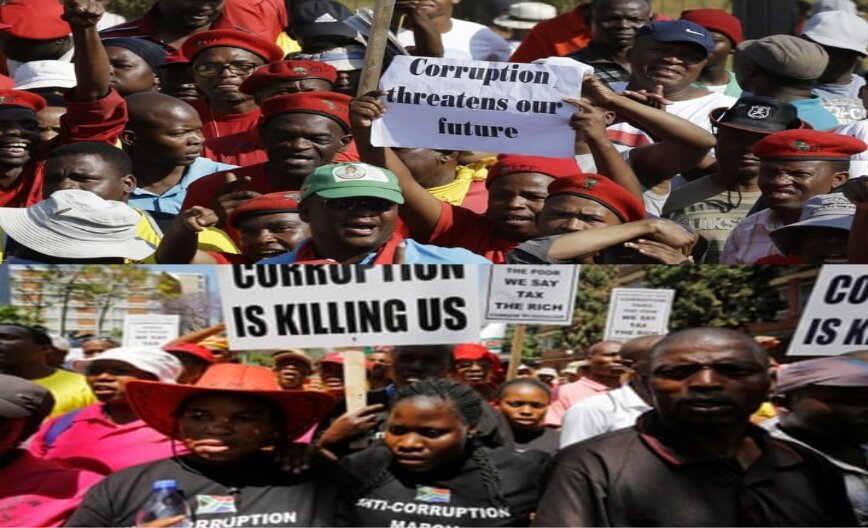
Corruption is often discussed as a political problem, but its strongest effects are economic and social. It affects how public money is used, who gets opportunities, and whether citizens can access justice, healthcare, education, and employment fairly. In many countries, including Kenya, corruption has become embedded in everyday systems, forcing ordinary people to rely on connections, informal payments, or political influence on access services that should be guaranteed by law. The 2025 Corruption Perceptions Index (CPI) shows that corruption remains a major global challenge despite decades of anti-corruption efforts. The index, which ranked 182 countries on a scale from 0 (highly corrupt) to 100 (very clean), reveals that more than two-thirds of countries scored below 50, while the global average dropped to 42. Although a few countries have improved since 2012, many others have either stagnated or declined, reflecting weakened accountability systems, eroding public trust, and mounting pressure on democratic institutions.
Countries such as Denmark (89 out of 100), Finland (88), and Singapore (84) continue to rank among the least corrupt due to strong institutions, transparent governance systems, and effective accountability mechanisms. At the opposite end are countries such as South Sudan (9), Somalia (9), and Venezuela (10), where weak institutions, political instability, and limited oversight continue to fuel corruption. Transparency International (TI), 2025, also warns that even countries traditionally viewed as stable democracies, including the United States, Canada, and several European nations, have experienced declining anti-corruption performance over the past decade.
Across many regions of the world, corruption continues to weaken economic growth, democratic institutions, and public trust. In the Americas, years of government inaction have allowed organised crime to expand, creating serious consequences for human rights and security. Eastern Europe and Central Asia remain among the world’s lowest-performing regions, where corruption is sustained by powerful vested interests that dominate political and public institutions. Even regions that traditionally perform well are facing growing integrity challenges. Western European countries make up nine of the top ten nations in the 2025 Corruption Perceptions Index (CPI). These global trends demonstrate that corruption is not limited to poor or politically unstable countries; rather, it thrives wherever institutions weaken, accountability declines, and public power is abused for private gain.
Kenya reflects many of these broader global governance challenges. According to Transparency International’s 2025 CPI, Kenya is ranked among the world's 51 most corrupt countries, highlighting the country's persistent governance and accountability challenges. Although Kenya has made periodic improvements, corruption continues to affect public confidence, service delivery, economic opportunities, and institutional accountability. The graph below further illustrates Kenya’s fluctuating corruption rankings over recent years, highlighting the country’s ongoing struggle to achieve consistent progress in transparency and governance.
Figure 1: Kenya’s CPI Ranking Trends, 2014-2025

Source: Transparency International’s 2025 CPI.
Corruption weakens the justice system by interfering with how laws are applied and who they ultimately serve. Instead of functioning as an equaliser for all citizens, justice systems affected by corruption tend to favour those with wealth, influence, or political connections. In such environments, investigations are often delayed, accountability becomes selective, and legal processes are shaped by personal or political interests rather than fairness. Over time, this erodes public confidence in the rule of law and weakens trust in institutions that are meant to protect citizens. For many Kenyans, especially those from low-income backgrounds, accessing justice becomes increasingly difficult. Citizen Digital (2026) reported that only 10% of the Kenyan population trusts the courts. High legal costs, long court delays, and limited access to legal aid make the system feel distant and inaccessible. While high legal costs, court delays, and limited legal aid reflect broader institutional weaknesses, corruption increases the cost of accessing justice by creating incentives for bribery, favouritism, and informal payments. This effectively turns justice into a resource that is more accessible to those with money or connections, reducing both efficiency and equity within the legal system.
This erosion of accountability is closely linked to broader weaknesses in governance and democracy. When transparency is low and oversight institutions are weak, public decisions can be influenced by private interests rather than the public good. In such settings, corruption and democratic decline tend to reinforce each other. Strong institutions such as independent courts, parliaments, audit bodies, and electoral commissions are essential in preventing the abuse of power. However, when these systems are weakened or manipulated, corruption can expand into deeper forms, including what is often referred to as state capture, in which influential networks shape policies and control public resources for personal gain. This undermines democratic governance and reduces public trust in leadership and institutions.
The problem is further compounded when civic space and media freedom are restricted. An open civic environment allows journalists, civil society organisations, and citizens to access information, speak freely, and expose wrongdoing. Investigative journalism and whistleblowing play an important role in ensuring that public resources are used responsibly. However, when media freedom is undermined through intimidation, censorship, or restrictive laws, corruption becomes harder to detect and easier to sustain. In environments where accountability voices are weakened, misuse of public resources often goes unchecked.
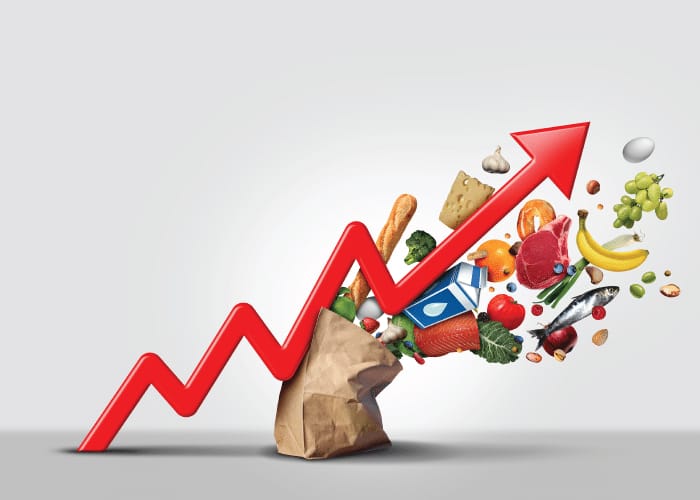
The consequences of corruption are perhaps most visible in the delivery of public services. When public funds are stolen, mismanaged, or inflated through corrupt contracts, citizens receive poorer healthcare, education, water, housing, and infrastructure services, despite paying for them through taxes. Citizens are often forced to either pay additional unofficial costs or go without adequate services altogether. This burden is felt most heavily by low-income households, where even small informal payments can significantly strain household income.
The consequences of weak accountability can extend beyond financial losses to the loss of human life. In May 2026, a fire at Utumishi Girls Academy in Gilgil claimed the lives of 16 students and injured 79 others. While investigations into the cause of the tragedy are ongoing, the incident reignited national concerns about safety compliance, oversight, emergency preparedness, and the implementation of recommendations from previous school safety audits. The tragedy serves as a reminder that when public institutions fail to enforce standards and accountability effectively, the costs can be measured not only in shillings lost but also in lives lost.
Recent findings by the Kenya Ethics and Anti-Corruption Commission (EACC) further illustrate the scale of the problem. According to the EACC 2024/2025 reports, the commission forwarded 175 investigation files involving corruption, economic crimes, and ethical breaches to the Director of Public Prosecutions for review. It also traced Ksh. 22.9 billion in illegally acquired and unexplained assets, equivalent to roughly 0.9% of Kenya’s ordinary revenue collection of KSh 2.571 trillion in the 2024/2025 financial year. In addition, it recovered Ksh. 3.4 billion in corruptly acquired wealth and prevented the loss of an estimated Ksh. 16.5 billion in public funds through proactive investigations. These figures highlight the enormous number of public resources lost or at risk due to corruption, resources that could otherwise improve healthcare systems, schools, infrastructure, and other essential public services across Kenya.
Who’s paying the price in Kenya?
Ordinary Kenyans, corruption is not experienced as an abstract political issue but as a daily economic burden that shapes access to opportunities, justice, and basic public services. According to The Worldwide Governance Indicators, 2025. Governance influences how households and businesses make decisions because people respond not only to laws and policies on paper, but to how institutions function in practice. When citizens believe that services depend on bribery, personal connections, or selective enforcement, trust in public institutions weakens and confidence in the rule of law declines. Perceptions, therefore, become economically significant, influencing whether individuals report crimes, seek justice, invest, or engage with public systems. In Kenya, these realities are reflected in public experiences with corruption across government institutions. According to the EACC 's National Ethics and Corruption Survey 2024/2025, corruption and unemployment were identified as two of the country’s biggest problems, with 44.6 per cent of respondents citing graft as a major national challenge. The report further showed that bribery remains the most common form of corruption in public offices, particularly in institutions connected to administration, health, land, transport, and education. Such practices effectively operate as a hidden tax on citizens, increasing the cost of accessing services that should ordinarily be guaranteed by the state.
Young people and graduates are among those bearing the highest economic costs of corruption in Kenya. Although the Kenyan economy created 822,100 new jobs in 2025, according to the Kenya National Bureau of Statistics (KNBS), more than 87 per cent of these jobs are in the informal sector, highlighting the continued shortage of stable, high-quality employment. At the same time, youth unemployment remains significantly high, with the 2024 National Council for Population and Development report estimating youth unemployment at 35 per cent, far above the national average. Corruption and nepotism further worsen these challenges, particularly in public-sector recruitment, where employment opportunities are expected to be allocated on merit. The widespread perception that jobs are secured through personal connections, bribery, or political patronage weakens trust in institutions, discourages confidence among graduates entering the labour market and undermines trust in public institutions. Investigations by the Ethics and Anti-Corruption Commission in 2024 have identified human resource management as one of the most corruption-prone areas in Kenya’s public sector, including irregular recruitment, falsification of academic documents, and favouritism in hiring processes. Such practices reduce the efficiency of public-sector recruitment by prioritising networks over competence, potentially lowering productivity and weakening institutional performance.
Small and medium enterprises also face significant pressure in such environments, even though SME’s play a significant role in economic growth and development across all economies. According to the Multidisciplinary Digital Publishing Institute (MDPI), 2024, SMEs contribute to approximately 80% of Global economic growth, approximately 50-60% for the Organisation for Economic Cooperation and Development (OECD) and 33% in developing countries. For entrepreneurs, corruption increases the cost of doing business through bribery demands, unfair competition, and selective enforcement of regulations. These additional costs are especially harmful to smaller businesses that lack political connections or financial buffers. Access to credit also becomes more difficult because uncertainty and corruption reduce investor confidence and increase perceived risk. As a result, many businesses struggle to grow, innovate, or expand, limiting their contribution to job creation and economic development.
The burden of corruption is even heavier in rural and marginalised communities. These areas often depend on public services and have fewer channels to demand accountability. According to Transparency International (2024), when funds intended for infrastructure, healthcare, education, or water systems are misused, entire communities are left underserved. Roads remain incomplete, schools are under-resourced, and health facilities lack essential supplies. This deepens regional inequality and reinforces cycles of poverty that are difficult to break. It also weakens trust in government, making citizens less likely to report corruption or engage with state institutions. In Kenya, these challenges are worsened by ethnicity-based favouritism and unequal political influence; some regions are perceived to receive more development projects and public resources than others. Communities with weak political representation often struggle with poor infrastructure, limited resources, weak law enforcement, and restricted access to justice. As corruption continues to divert resources from vulnerable populations, regional inequality deepens, poverty persists, and public trust in government institutions declines.
Despite the efforts of oversight institutions, enforcement challenges remain a major obstacle. Bodies such as the Ethics and Anti-Corruption Commission continue to investigate corruption cases, but delays in prosecution and inconsistent implementation of recommendations reduce their impact. When accountability systems are slow or ineffective, corruption becomes less risky and more normalised within public institutions. According to EACC Reports 2024/2025, 1,846 reports were recommended for investigation across various categories of corruption-related offences, as illustrated in Figure 2.
Figure 2: Classification of Corruption Reports Received (EACC).

Source: Ethics and Anti-Corruption Commission Annual Report 2024/2025.
Addressing corruption in Kenya requires more than arrests and public statements; it demands structural reforms that strengthen accountability and reduce political interference within institutions. Oversight bodies such as the EACC, the judiciary, procurement authorities, and audit institutions need greater independence, adequate funding, and stronger enforcement powers to investigate and prosecute corruption cases without political pressure. Public procurement systems should become more transparent through open digital platforms that allow citizens, journalists, and civil society to track government spending and tender processes in real time.
At the political level, reducing patronage networks will require stronger merit-based recruitment systems, campaign finance transparency, and stricter conflict-of-interest laws to limit the influence of political loyalty in public appointments and resource allocation. Judicial reforms aimed at reducing case backlogs and speeding up corruption-related prosecutions are also necessary to strengthen deterrence and restore public trust in the rule of law.
Strengthening accountability also requires greater citizen participation in the electoral process. Voting provides one of the most direct mechanisms through which citizens can influence governance and hold leaders accountable for corruption. While allegations of corruption are frequently raised by politicians, public officials, and even Members of Parliament, meaningful change is unlikely if voters continue to reward leaders associated with poor governance, misuse of public resources, or weak accountability records. By making integrity, transparency, and performance key considerations during elections, citizens can help strengthen Parliament and other representative institutions, creating greater pressure for anti-corruption reforms and more responsible use of public resources.
Equally important is the protection of civic space and media freedom. Independent journalism, whistleblower protections, and active civil society organisations remain among the strongest tools for exposing corruption and pressuring institutions to act. Although these reforms may appear difficult within Kenya’s current political environment, long-term institutional accountability, public participation, and sustained political will remain essential if corruption is to be reduced meaningfully rather than merely managed.
In conclusion, Kenya’s corruption challenges reflect a broader global pattern identified in the 2025 Corruption Perceptions Index (CPI), corruption is not limited to specific regions or income levels but is closely linked to institutional strength, transparency, and democratic accountability. Although corruption is often measured through rankings, investigations, and financial losses, its real cost is ultimately carried by ordinary citizens. In Kenya, corruption affects far more than politics; it shapes access to justice, healthcare, education, employment, and economic opportunity. From unemployed graduates and struggling entrepreneurs to rural communities lacking basic services, the burden falls most heavily on those with the fewest resources and least influence. While anti-corruption efforts continue, meaningful progress will depend on stronger institutions, transparent governance, active civic participation, and sustained political will. Without these reforms, corruption will remain not only a governance challenge but also a major barrier to Kenya’s social and economic development.






2 Comments
Log In or Sign Up to join the conversation
Loading comments...