Thursday, June 11, 2026
Author: Alex Maina
Category: Economic Growth
⏱️ Estimated Read Time: 5 min read
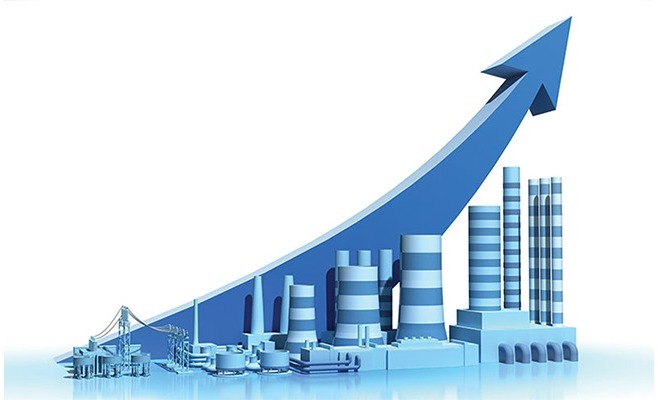
Industrialisation is the process of transforming a society economically from subsistence agriculture to a machine-driven, manufacturing, factories and technological innovation. Industrialisation, when supported by appropriate institutional and policy frameworks, can contribute to economic development through mass production, urbanisation, and efficiency gains, potentially raising income levels and living standards. Industrialisation comprises manufacturing, mining, and construction, which make up to 16.5% of the total Gross Domestic Product (GDP) in 2024, as illustrated in Figure 1 below; this is a decrease of 2.5% from 19% in 2014.
Figure 1: Industrial Sector percentage of GDP

Source: World Bank
Kenya’s Economy stands at a critical position, where, according to Rostow's stages of economic growth, the country is at the take-off stage. This is a stage that should be characterised by rapid industrialisation, an increased investment rate of about 5 to 10%, technological advancements, urbanisation, and institutional changes from informal to formal structures. However, Kenya has not been able to fully capture the potential characterised by this stage.
Kenya’s manufacturing sector has since lagged in terms of advancements, and it has experienced a decrease in its growth by 7.27%, as shown in Figure 2 below. Manufacturing includes agro-processing, which is the value addition to agricultural produce. Hence, the lack of growth in manufacturing also affects the agriculture sector.
Figure 2: Manufacturing Contribution to GDP

Source: Author's compilation from the KNBS Economic Survey
The industry sector has faced various challenges, which have resulted in low contribution to the GDP, leading the country not to access its full potential in economic development. The main challenges are input constraints and high operating costs. The cost of fuel, electricity, raw materials, and transport remains high. This increases the overall cost of production and lowers profit margins. According to the Kenya Association of Manufacturers (KAM), 76.9% of the manufacturers reported that the cost of inputs has been increasing and unpredictable. Increased cost of production leads to high prices, reducing the goods' competitiveness in the global markets and local markets.
Unpredictable taxes and regulatory hurdles have highly impacted the industry sector. As collaborated by John Kedogo, tax policies have been unpredictable in recent years; this has indirectly reduced Foreign Direct Investment (FDI), hence low growth in the sector. In the same way, various policies like licensing and compliance improve the sectors, but on the other hand, hinder entry to the sectors.
Limited access to credit due to information asymmetry, lack of collateral, especially to Small and Medium Enterprises (SMEs), and global economic uncertainties has highly affected the sector. There has been a reduction or postponement of investment opportunities, reduced improvement in technological advancement, and research for new opportunities because of increased loan interest rates, hence hindering the sector's growth.
There is limited market access due to high poverty levels, which in turn leads to low purchasing power. Poverty continues to affect a substantial proportion of the population, estimated at 39.8%. A high poverty level is an indicator of high reliance on subsistence agriculture, a traditional economy, and generally low Gross Domestic Product (GDP). In an economy with a high poverty level, the savings rate is low, and the savings rate translates into the level of investment, as shown in Figure 3 below.
Figure 3: Relationship between Poverty, Saving and Investment

Source: AI Generated
Another dominant challenge is the skill and technological gap. According to Deloitte’s report, 48% of manufacturing organisations struggle to fill operational roles. Many industries struggle to adopt modern, automated technologies, causing them to rely instead on outdated, manual, or semi-automated machinery. This reduces efficiency and hence results in low productivity.
Kenya’s economy must invest in and focus on manufacturing to solve the issues of unemployment and reduce poverty and income inequality, moving towards the drive to the maturity stage. Promoting research, innovation, and increased efforts towards Technical and Vocational Education Training (TVET) and Competence-based Education (CBC) would reduce the gaps in skills and technology. This would increase efficiency and productivity, hence sustained growth in the industry sector.
A well-structured policy framework can enhance the competitiveness of goods in both the domestic and global markets. Introduction of the policies used under the SEZs and EPZs, such as tax exemptions and reduced income tax for all industry sectors, would increase the industry sector’s share of GDP and create more job opportunities. Currently, the 170 available enterprises have contributed to 111.8 billion in sales and created employment for 75,598, as shown in Table 1 below. If the policies were diversified across the industry sector, there would be an increase in production. Additionally, the enhancement of subsidies would reduce the overall cost of production, increase return on investment, and attract FDI to the economy.
Table 1: Economic contribution
| Description | Year 2023(billions) |
| Number of Enterprises | 170 |
| Capital Investment | 112 billion |
| EPZ Sales | 112 billion |
| Value of Exports | 106 billion |
| Direct Employment | 75,598 |
Source: Author’s Compilation from Export Processing Zones Association of Kenya
Lastly, facilitating access to financial markets for Small and Medium Enterprises (SMEs) using various collaterals such as inventory, accounts receivable, and cash or marketable securities for risk management helps firms to secure capital to invest in technology and modernisation. This would increase productivity and sustainability.
In conclusion, for our country to advance and to sustain its economy towards the drive to maturity stage, there is a need to address the key challenges affecting the industry sector. The key challenges include high cost of operation and inputs, high and unpredictable taxes and government policies, limited access to credit, competition from imports, skill gap, and technological gap. These challenges have made poverty dominant, and people have low purchasing power. Inclusive development should be able to improve employment generation, structural transformation, knowledge-based economy, poverty reduction, equity, and sustainability. Industrialisation is the core of inclusive economic development.






0 Comments
Log In or Sign Up to join the conversation
Loading comments...